
Comparisons · Wrap
Wrap vs TimeCamp for time tracking
Automated time operations or a focused daily time record? Compare the work each product is meant to support before comparing the price.
The decision in brief
Prioritize the part of the stack you are replacing: automatic capture, workforce oversight and client-budget review need separate evaluation. Wrap is worth considering when your priority is contributor-reviewed project time, a guided daily wrap and company-level pricing.
Choose for the workflow
Wrap vs TimeCamp: features and workflow
A complete day of client work.
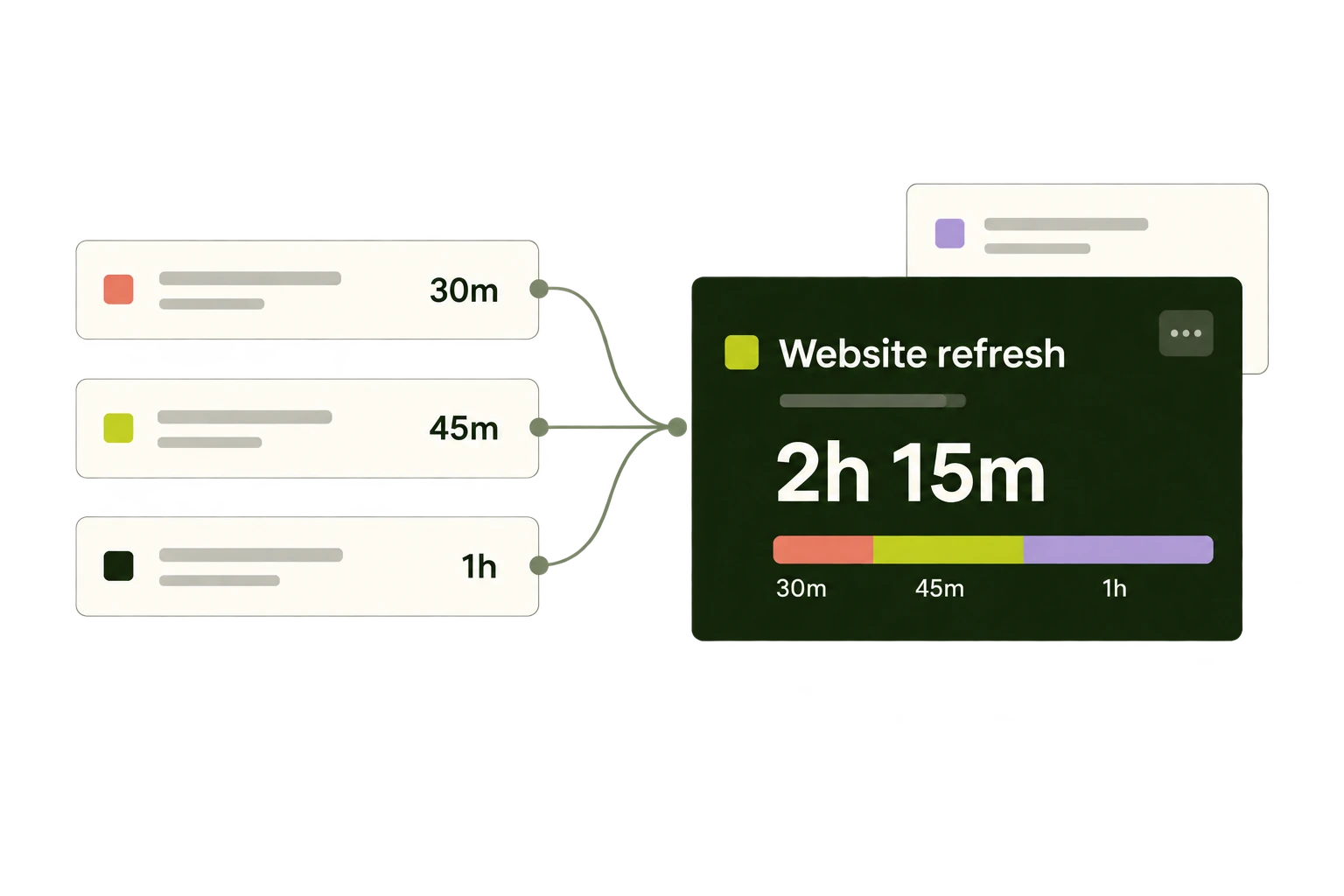
Timers, manual entries and daily wrap feed weekly timesheets and project reports. Review phases, budgets, internal costs and billable work without requiring passive activity capture.
See the daily routineAutomated time operations.
Keep TimeCamp under consideration if automated time collection or monitoring is a required part of your setup.
Check the product detailsDecision criteria, not a claim that the products have identical scope.
| Decision | Wrap | TimeCamp |
|---|---|---|
| Working habit | Record as you go, add completed work, or allocate missing time at day’s end. | TimeCamp presents automated tracking, timesheets, billing, budgeting and workforce-monitoring capabilities. |
| Evaluation priority | A contributor’s final record and the project-budget conversation it supports. | Test automated time operations with the people who will enter and review the work. |
| Product boundary | Wrap supports deliberate entry and daily allocation. It does not substitute for monitoring or automatic application classification. | Use the official product page to confirm the workflow and the relevant plan’s limits. |
| Cost basis | Company bands: Free up to 10 active members; Team 11–99; Business 100+. | Use a current written quote, including billing period, seats, minimums and extras. |
Working habit
- Wrap
- Record as you go, add completed work, or allocate missing time at day’s end.
- TimeCamp
- TimeCamp presents automated tracking, timesheets, billing, budgeting and workforce-monitoring capabilities.
Evaluation priority
- Wrap
- A contributor’s final record and the project-budget conversation it supports.
- TimeCamp
- Test automated time operations with the people who will enter and review the work.
Product boundary
- Wrap
- Wrap supports deliberate entry and daily allocation. It does not substitute for monitoring or automatic application classification.
- TimeCamp
- Use the official product page to confirm the workflow and the relevant plan’s limits.
Cost basis
- Wrap
- Company bands: Free up to 10 active members; Team 11–99; Business 100+.
- TimeCamp
- Use a current written quote, including billing period, seats, minimums and extras.
From the official website
TimeCamp in its own context.
See how TimeCamp presents its automated time operations workflow. Use the official page to confirm current capabilities and the plan your team would need.
Read the official product pageProduct overview reviewed November 4, 2026. Features may depend on plan. This comparison does not claim a hands-on test of a paid account.
What would your team pay?
Wrap charges by company size, not per person. Enter your own TimeCamp rate to compare like-for-like monthly equivalents.
$360.00 over 12 months at the monthly rate
Your quote goes here
Add your TimeCamp quote to compare.
TimeCamp rates are not prefilled or verified. Excludes taxes, add-ons, discounts and upfront commitments.
Wrap: Free up to 10 active members; Team 11–99, $30/month or $300/year; Business 100+, $100/month or $1,000/year. Check plan details. TimeCamp: check the official website for current rates and terms.
Use this model only for a per-seat quote. For a bundled or fixed-price proposal, compare the full written totals separately. Entered amounts do not establish feature equivalence.
A pilot with a useful answer.
Use a mixed day of client delivery, internal meetings and offline work. Review the source of each entry as well as the final project totals.
Include the person entering time and the person reviewing it. A workflow can feel quick for one and leave the other rebuilding context at the end of the week. Keep the sample small enough to reconcile every entry.
- 01
Capture
Record a representative day, including an interruption and work away from the main task.
- 02
Correct
Change one duration or target. Check permissions and whether the report reflects the correction.
- 03
Reconcile
Compare the project totals with the entries and the output your billing or operations owner needs.
Questions worth asking.
When should we keep TimeCamp?
Keep it if your team can complete a representative week without missing records, the reviewer can reconcile the output, and the workflows you depend on are covered by your current plan. A different subscription price alone is not a reason to disrupt a working process.
What would we give up by switching to Wrap?
Wrap supports deliberate entry and daily allocation. It does not substitute for monitoring or automatic application classification.
Can we bring our entire history across?
Do not assume full migration compatibility. Export a sample, identify the fields and dates you need, and verify the exact import route before committing to a cutover. Retain an independent archive of the original records.
A clearer record starts
with one working day.
Try the workflow with your own team. Free for up to 10 active members.