
For your team · Wrap
Time tracking for remote service teams
Help distributed contributors close their day and give reviewers a consistent project view.
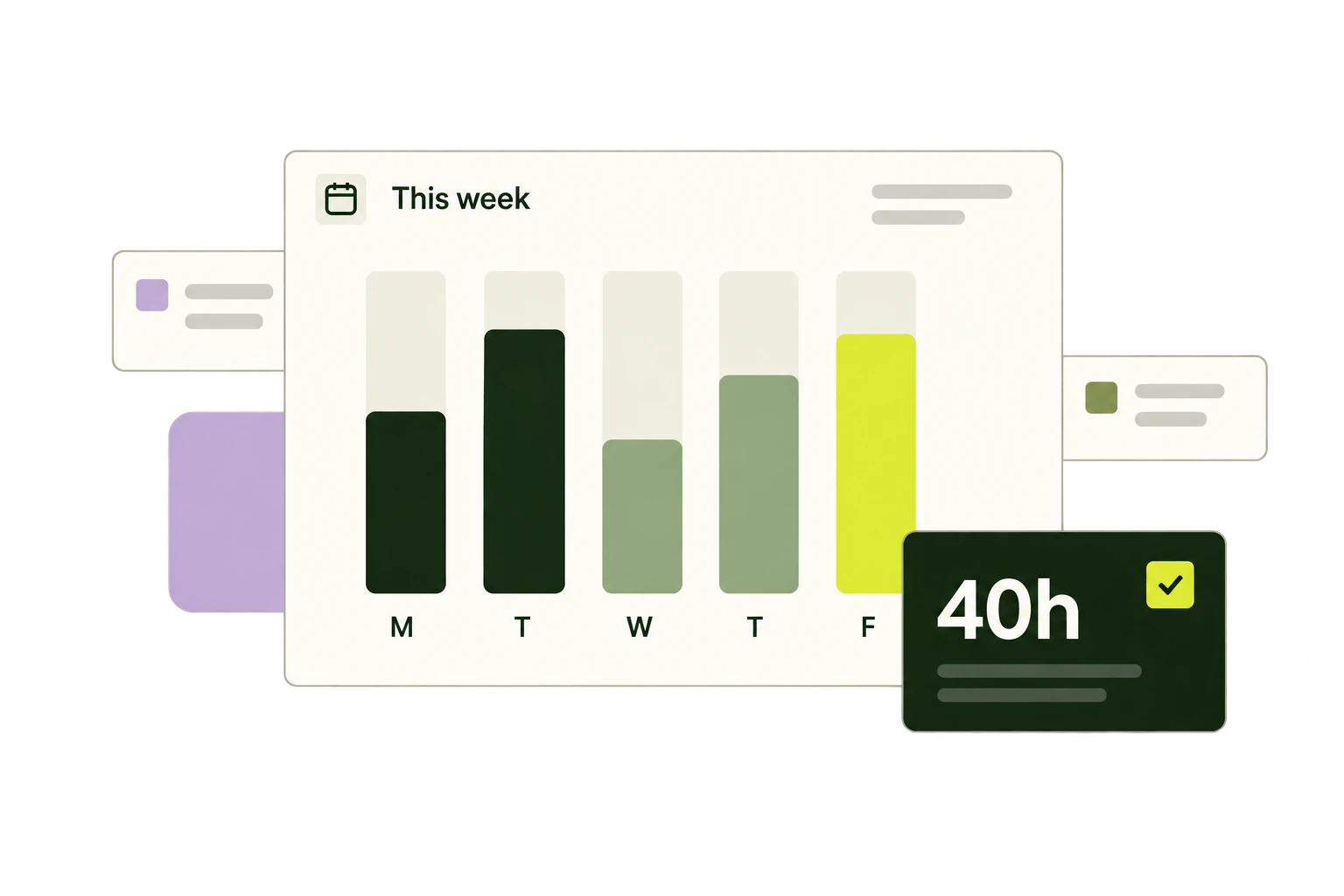
Built around your working day
Remote teams can have different schedules and fewer natural moments to reconcile work. A late-week request for timesheets often arrives when the context has already faded.
What remote service teams can track
Focused delivery
Async coordination
Client meetings
Close the gaps
before the week moves on.
Start a timer for a focused session, add a known block manually, or use the guided day wrap to account for time still missing. The final record connects to the same projects and reporting view.
For remote service teams, that means the day can include focused delivery, async coordination, and client meetings without requiring everyone to use an identical tracking habit.
Explore the daily wrapWhere did your time go today?
Adjust the allocations to see how a day could add up.
Illustrative allocation, initially six hours, not a recommended schedule or a benchmark. Adjusting this example does not save time or create an account.
A sensible first week
Start with one engagement.
- 01
Agree the company’s time conventions, working pattern and review deadline. Keep project names clear enough that people can choose correctly without a live clarification.
- 02
Invite a small group with different delivery responsibilities. Agree what a useful description looks like and when the daily record should be complete.
- 03
Review missing records with schedule and leave context. A quiet communication channel or a different working day is not evidence of low contribution.
- Start with
- One engagement
- Include
- Contributors and a reviewer
- Look for
- Complete, explainable entries
Questions worth asking.
Does everyone need to track in the same way?
No. Agree the record you need and when it should be complete. Contributors can use timers, manual entries and the day wrap according to their work.
What should we keep in our existing tools?
Wrap does not monitor screens, score activity or prove attendance. Recorded project time supports a different kind of review.
How should we judge the pilot?
Review whether entries are complete, projects are selected consistently and the report supports your next scope or budget conversation. For remote service teams, the useful result is an explainable record of the work, not a higher number of logged hours.
How does pricing work for the team?
Wrap charges per company in active-member bands. The Free plan covers up to 10 active members; the paid bands are Team for 11–99 and Business for 100+. All self-service plans share the same features.
A clearer record starts
with one working day.
Try the workflow with your own team. Free for up to 10 active members.