
For your team · Wrap
Time tracking for design studios
Track exploration, execution and critique without forcing every working day into identical blocks.
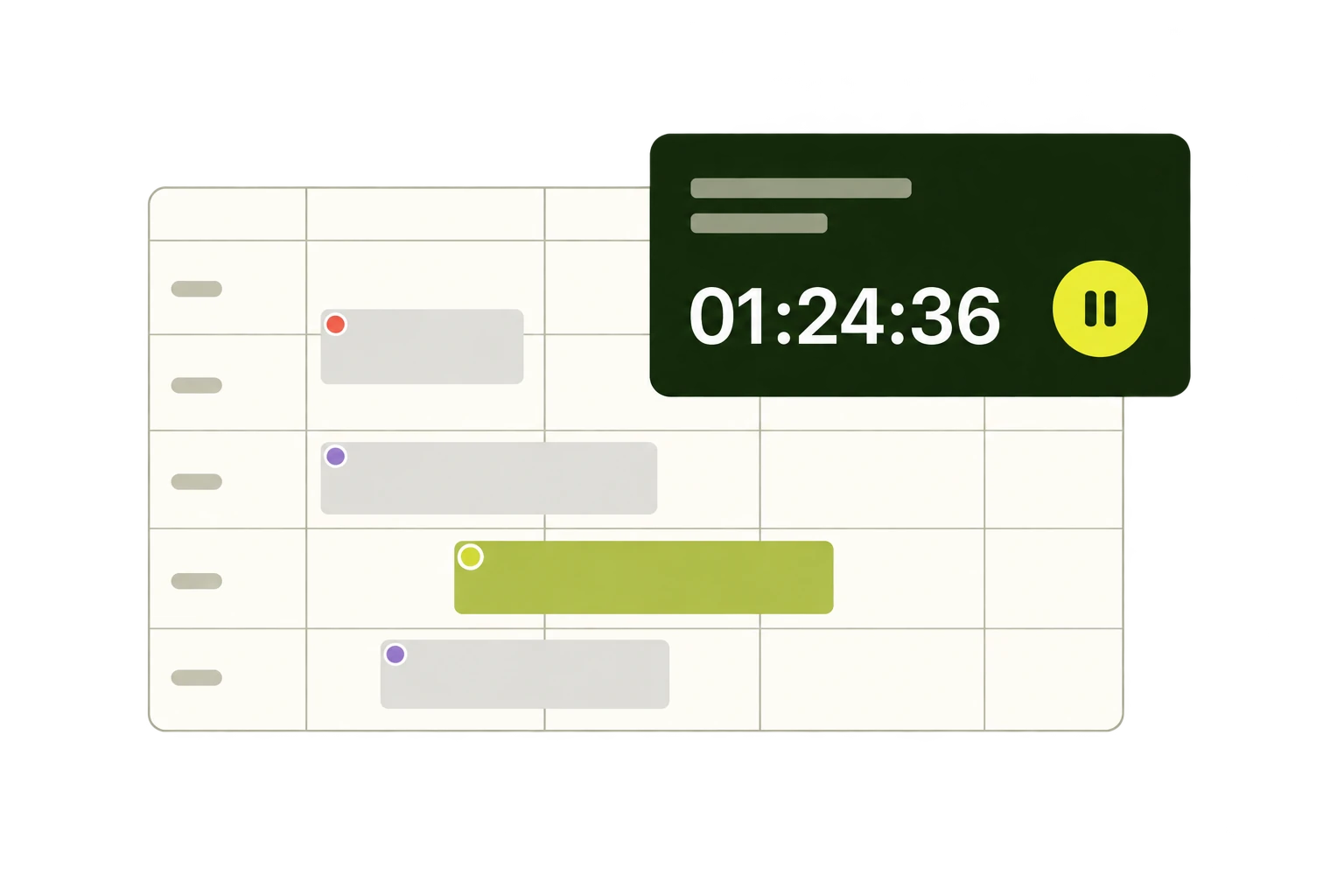
Built around your working day
Design work often alternates between long focused sessions and short critiques. A day can feel fully occupied while the timesheet contains only the obvious production session.
What design studios can track
Design exploration
Internal critique
Production files
Close the gaps
before the week moves on.
Start a timer for a focused session, add a known block manually, or use the guided day wrap to account for time still missing. The final record connects to the same projects and reporting view.
For design studios, that means the day can include design exploration, internal critique, and production files without requiring everyone to use an identical tracking habit.
Explore the daily wrapWhere did your time go today?
Adjust the allocations to see how a day could add up.
Illustrative allocation, initially six hours, not a recommended schedule or a benchmark. Adjusting this example does not save time or create an account.
A sensible first week
Start with one engagement.
- 01
Use project phases for exploration, development and delivery where useful. Keep a place for internal critique and file preparation so the record reflects the work required to ship.
- 02
Invite a small group with different delivery responsibilities. Agree what a useful description looks like and when the daily record should be complete.
- 03
Review effort by phase before changing an estimate. A longer exploration phase may be intentional; a report should help explain that choice, not flatten it into a productivity judgment.
- Start with
- One engagement
- Include
- Contributors and a reviewer
- Look for
- Complete, explainable entries
Questions worth asking.
Do designers have to run a timer all day?
No. Timers, manual entries and daily wrap can coexist. Agree on the quality of the final record rather than requiring one capture habit from everyone.
What should we keep in our existing tools?
Wrap does not replace design files, critique tools or asset handoff systems.
How should we judge the pilot?
Review whether entries are complete, projects are selected consistently and the report supports your next scope or budget conversation. For design studios, the useful result is an explainable record of the work, not a higher number of logged hours.
How does pricing work for the team?
Wrap charges per company in active-member bands. The Free plan covers up to 10 active members; the paid bands are Team for 11–99 and Business for 100+. All self-service plans share the same features.
A clearer record starts
with one working day.
Try the workflow with your own team. Free for up to 10 active members.